Showing posts with label kindergarten. Show all posts

Thursday, July 1, 2010

Meet Teacher and Entrepreneaur, Ellen Richard - The Topic is Writing and Spelling

Via the Internet, I recently met an amazing teacher and innovative entrepreneur and she has some terrific ideas so I asked her to post a guest blog.  Here she is with her husband and their new baby (Ellen took a bit of time off from teaching when their baby was born and she put her educator energies to good use).  I've also posted similar comments on this subject at my blog for parents so feel free to share it with moms and dads, grandmas, uncles and other family members who interact with young children.  So without further adieu, here's Ellen:

I think we'd all agree as teachers that spelling is tough.  But, as a teacher from down in the trenches, I can tell anyone that demanding that kids write the same words over and over and over again is not the most productive use of your or the children's time.  Smart teachers have shifted away from rote memorization and endless tracing of inconsequential spelling lists and, instead, are spending their time figuring out ways to engage students.  It's my experience that kids who truly are excited about any subject matter learn more and learn it faster.  So how do we get them excited about spelling?

A Sidebar of Sorts

Before we talk about that, I want to digress for a moment and talk about students who have issues memorizing (there are many out there, not even counting those with identified learning disabilities).  You know at least one student like this I'm sure and they are in a real pickle.  There is no context for the words and there are no connections made.  Now, in all fairness, sometimes the spelling words provided by the textbook you use rhyme, but more often than not, they are just a group of words that a publisher of curriculum happens to think were appropriate for students at that grade level.  One size doesn't fit all.  There are so many kids whose brains just work a little differently and, for those kids, spelling can be a huge problem.

Now back to the question:  
How do we get them excited about spelling?

It starts with authentic learning experiences.

Kids need engagement in what they are doing.  They need to see how and why spelling is so important.   When we write something important, something we want to communicate, proper spelling is the common ground that helps our readers understand what we want them to know or feel or "get".  Tracing a list of words does not help students make essential connections that they need to make to learn how to spell words, or retain that information.   It doesn't help them be able to communicate clearly.

TRACING AS A TOOL

I believe it's just fine to have young kids trace words to help them learn how to spell but here's the catch -- the words have to be meaningful.  A list of random words is not meaningful.  A letter to a friend, on the other hand, often is.  A story written by the child himself is meaningful.  An article about the child's favorite sport or musician is meaningful.  It's our job as educators to find out what interests our students so we can help them make those connections.

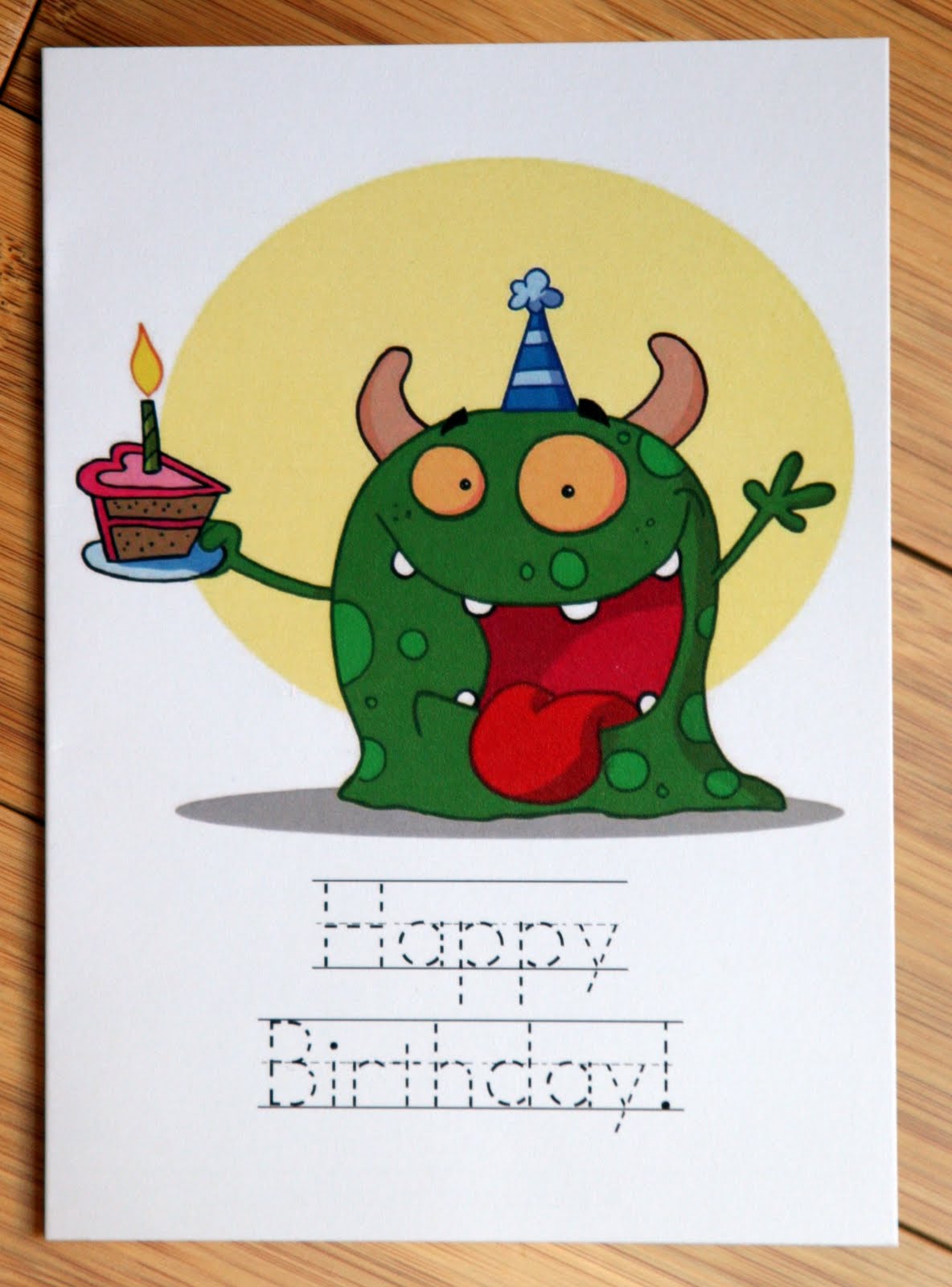
You can certainly use the tracing idea and even get a few volunteers from among your parents to help you create the "traceable" letters with a handmade dotted font like you see in the photo below.  Students can dictate a few sentences or a short story and the volunteer or teachers writes what they say in the dotted font.  Then, when that student is excited about the story he has "written", allow him to trace over the dotted font to write his story and then have him read it to you.  He will probably want to do it more than once or even take it home to share.  Offer this as an alternative at times to standard composition.  Both practicing spelling and handwriting AND composing are important in the development of young writers.

TAKING IT TO THE NEXT LEVEL

While I was home on maternity leave this past January, I realized that I could turn a very simple idea I had used in the classroom for a long time (having children trace meaningful words) to help both with spelling and handwriting.  With a little practice and the idea of hand-written cards, I came up with Letter Learning.  I missed teaching and had a million thank you cards to write.  Because both of these things were on my mind, the idea for educational greeting cards was born. 

I remembered how my own students struggled often with spelling and handwriting, and knew how much they loved their family and friends.  I also knew that young kids love to be "like Mom" and since 80% of greeting cards are sent by women, so it seemed that greeting cards that help kids learn to write and spell was a long overdue instrument.  Here's an example of what one of my cards looks like on the outside:

With the fun colorful pictures on the front and dotted line guides, kids love them!

Thanks, Ellen, for the great ideas. 

NOW IT'S YOUR TURN

I'd love to hear how you work with young children to engage them in spelling and practicing their handwriting.  Do you have budding authors in your kindergarten classroom?   Preschool children who are just learning to print?  Students in first or second grade who are still learning how to spell many words? 

What are your most effective ideas?  Sharing them in a comment post will help us all be better teachers.

Thursday, March 11, 2010

The Little Engine That Must: Inspiring Young Readers

I just spent a terrific hour talking with J. Renee Gordon of the BlogRadio show,  
Empowering Educators.

We talked about

- the importance of early childhood learning in both preschools/child care centers and at home

- what is essential for kindergarten readiness (and partnerships that foster that) and

- placed a special focus on literacy for children ages 3-6.

Whether you joined us live on the show or want to listen to the podcast later, you'll find information and resources right here.

Findings of The National Early Literacy Panel (2009)

Six early skills predictive of later literacy achievement

1. Alphabet knowledge
2. Phonological awareness
3. Rapid automatic naming of letters or digits
4. Rapid automatic naming of objects or colors
5. Writing or writing name
6.  Phonological memory

Five early skills modernately predictive of later literacy achievement

1. Concept of print
2. Print knowledge
3. Reading readiness (usually a combination of alphabet knowledge, concepts of print, vocabulary, memory and PA)
4. Oral language
5. Visual processing

Studies conducted by Hart and Risley (1995) showed that three-year-old children of professional parents had larger vocabularies than children of parents on welfare.  This finding is less shocking when considered in light of another:  children in professional homes heard 382 words an hour while children raised in welfare homes heard an average of 167 words an hour.  There can be a gap of as much as five times greater in vocabulary between these two groups by the time children reach kindergarten.  This doesn't have to be economically driven, if we can help families, in a supportive way to experience literacy with their children.  If you'd like to do more reading on this research, check out this summary of Meaningful Differences in the Everyday Experience of Young American Children or find the book itself (a good choice for staff development discussions at your school.  .

On average, according to the American Association of Pediatrics, preschool children watched 2.6 hours of TV on weekdays and 2.7 hours on weekends.  This association, however, recommends that children under 2 years old watch little or no TV.

Here are additional resources to check out on these topics:

PreK Now is an advocates of high quality early childhood experiences for young children

Harlem Children's Zone - 100% of their children are ready for kindergarten for the 7th consecutive year!


100% of third graders at Promise Academies I and II tested at or above grade level on the math exam, and in the English and Language Arts (ELA) over 93% of the Promise Academy I third graders tested at or above grade level, outperforming New York State, New York City and District 5 peers.

The National Association for the Education of Young Children addresses the needs and education of children ages zero to eight.

Want to be inspired?  Visit Inspiringteachers.com.  You might start with The Power of Teaching. 

Don't forget to visit Share A Story:  Shape A Future.   Whether you are a parent or a teacher or just someone how loves children and wants to share the incredible gift of literacy with a child, you should visit this live, week-long (March 8-12) virtual event sponsored by my friends at
The Reading Tub.

While you're on the inspiration channel, join my revolution!   

Whether you are a parent or an educator, you CAN make a difference with your child (or children) when it comes to reading.  The first step is to ENGAGE them, reach out to families and schools and children with the message that reading IS for everyone.  These tools will help you do just that.

Educators, librarians and parents can all benefit from this annotated list of over 180 picture books that can be used with 5-18 year olds to introduce knowledge as a base to understanding textbook contents in science, history, art, math, etc.

Extensive indexing gives educators, librarians and parents a variety of ways to use a picture book a day with great results. The 1-180 listing also provides a convenient "one picture book for each day" approach that follows many familiar themes (such as Grandparent's Day, winter holidays, etc.) throughout the school year.
Available through Inspiringteachers.com. 


Two guidebooks, designed to be used in tandem, one for preschool and kindergarten teachers (Before They Read) and the other for parents of 3-6 year olds (Anytime Reading Readiness).

Here's what others say:

“If you want to turn your preschooler into a lifelong reader, you need Anytime Reading Readiness. It skillfully guides parents as they create a pressure-free love of language and learning in their child.” – Susan Newman, Ph.D., social psychologist and author of Little Things Long Remembered: Making Your Children Feel Special Every Day

“This book is chock full of great suggestions for helping children learn how to read. It includes all you need to put together a wonderful research-based program—a must-read.”
—Susan B. Neuman, former U.S. Assistant Secretary for Elementary and Secondary Education

Final Words

In closing let me invite you to post your own comments about these topics and to share my parent blog full of fun, practical ideas and information, as well as this teacher blog, with those you know who play those roles. 

One question to ponder that arose during the show:

Does coloring have anything to do with literacy development?  Is there research out there to address this question?

My sense was that it is certainly a pre-writing experience that builds muscles in the hands.  I also know the importance of eye-hand coordination in coloring and in reading, so I see some anecdotal connections there.  If you know of any research, please share it.  Here's a good article about how learning across many spectrums works in early childhood, from ReadingOnline.

Are you inspired?   

Monday, February 22, 2010

Gettiing Back on Track

The new year has started and well on it's way so I realized it was time I came back and started posting more frequently to this blog.  Please forgive my absence; we have some exciting new resources to share with you!

TEACHER RESOURCES

This past weekend I was privileged to see my friend, Dr. Steven Layne, at a conference here in Alabama.  Many of you may know him if you are members of IRA.  Wow! 

I never cease to be inspired by Steven's passion for literacy.  The fact that a partnership to produce a book and the related friendship helped draw him from the brink of death is an amazing story.  In addition to all the wonderful picture books and books for young adults Steven has written, he now has a great new book out entitled Igniting a Passion for Reading, for teachers.  In it, he asks an important question:  "how can we teach the 'how' without the 'why'?

Perhaps at no time in history is that more important to ask as our literacy requirements and the definition of literacy expands and the motivation to read seems to get so little attention.  If we do not give children authentic, meaningful-to-them reasons to read, then they will not choose to be readers.  And what a limitation that puts on the future of our world.

My question relating to this topic is:  are you as a teacher a passionate reader?  Do you read yourself?  Do you share that passion in the middle of decoding and fluency lessons with your students?

I just finished Donalyn Miller's The Book Whisperer, which is another title I would heartily recommend on this neglected subject.  Miller is a 6th grade teacher in Texas that takes what some might consider a quite unorthodox approach to teaching reading and social studies.  Yet, in this world of "teaching to the test" she has incredible results on her student's state assessments without doing so (in four years ALL of her students have passed the state reading assessment - not one failure to meet "AYP"!).


Both these books send strong messages:

MOTIVATION HAS A PLACE                 INSPIRE!

We must pay attention to the motivation of our students to learn to read and to sharpen their reading skills.  Dr. John Guthrie has been studying motivation of students for a very long time and, if you need research to back your attention to this element, and to "justify" its inclusion to your administration, he's the one to reference.

Teachers can include both instruction in the mechanics AND create a strong rich environment that draws children of all ages and of all backgrounds to the reading table. 

Of course, it is challenge to do more than deliver a script, teach a lesson or assess our students, especially with the varied and heavy responsibilities all teachers face.  Many educators can get easily frustrated, discouraged or dulled by ignoring the part of them that drove them to be a teacher in the first place. In fact, what brought you to teaching in the first place was the same thing that we are talking about - a spark, motivation to make a difference, a love of learning. 

I encourage each of you to read these resources and others and recapture that spark in your teaching.  That is when we will have children benchmarking assessments, we'll have the wisdom to know how much assessment is essential and how much is counterproductive for our students, we'll get to know the needs of our students, have the standards stamped in the back of our minds and go out and teach.

RESOURCES FOR STUDENTS AND FAMILIES

Now that I've given you a few resources for yourself, I'll list a few ones for your students (and their families):

The Reading Tub, a family and educator-friendly nonprofit, is adding more and more book reviews and resources (for children of all ages). 

You can subscribe to their Scrub A Dub Tub Blog to get a regular dose of what's available.

Do you know that they have an Author's Showcase (which I'm excited to be participating in this week!)? 

They also have community projects you can involve your students in like Read it Together and Use Your ABCs?  And a newsletter called The Wash Rag?

Adlit.org (from the same people who bring us Reading Rockets) has terrific book lists for those teaching tweens and teens. Don't forget that among your "assigned" readings, you need to give your students at least a snippet of time to read something of their choice.

You can meet authors of nonfiction (how many kids do you have that like to read the real stuff) and get their insight into teaching and using nonfiction books at I.N.K.'s blog.  They share even more resources for using nonfiction to teach at their INK THINK TANK.

Don't forget your parents. 

If you teach kindergarten through 3rd or 4th grade, you have quite a bit of engagement and involvement from at least a core group of parents. 

1.  Encourage them to play a unique role with their child's literacy development (not the one you do with lessons and worksheets, etc.). 

2.  Help them learn to help their children use reading and writing in authentic, everyday situations. 

3.  Let them know it's OK not to like a book and to choose another. 

4.  Surprise them by telling them that you want them to have fun with reading and books, play games, and use the time they have with their child to strengthen their relationship (real chats with their children can do that and grow vocabulary).

If you teach 4th grade or above, children are becoming more independent and many parents don't see a role they have in continuing to support their child's literacy development.  Certainly the "snuggle and cuddle" bedtime reading doesn't work for many of them any more. 

Again, go back to that theme or authentic experiences.  Every family has to grocery shop, pay bills, do laundry and run errands.  Literacy is right in the middle of all of that.  Making lists, reading labels, checking figures and reading statements, checking labels so we don't shrink shirts or turn underwear pink, reading street signs, maps and billboards - that's the stuff real-life reading is made of. 

A CAVIAT:

It's easy to make the mistake of trying to teach parents techniques, strategies, etc. that you have learned are effective in the classroom but you will limit the number of parents who want to be engaged in that.  If we are going to help our most at-risk and struggling students, we provide more than rigorous classroom instruction.  We must draw families into the experiences that will create life-long readers, writers and learners.

For more authentic ideas for families, 

1)  share my blog for parents which fluctuates between postings from that "sit with your child and read" stage to the support of independent older readers. 

2)  If you teach children in kindergarten, Anytime Reading Readiness, my new book for families of children ages 3-6, is chocked full of quick, easy, ready-to-use ideas.  It's partner book, Before They Read, is a guidebook for teachers in preschool and kindergarten.

3)  The National Center for Family Literacy has a free newsletter for parents. 

4) Even if you choose to use "educationese" with your families (and they are receptive to that), make sure you translate that into family-friendly terms and activities.  The South Shore Regional School Board in Canada has put together a guide to do just that with parents who have K-6th grade children.  

5) The Peel District School Board has put together a rare guide for parents of independent readers in middle and high school that you must check out.  It's one of the best I've seen.

THIS BLOG NEEDS YOUR VOICE

This blog is established as a sounding board, a collaborative tool, a chance for a community of teachers to find resources AND communicate questions, comments, encouragements and challenges. It will only improve with your input.   Feel free to share your comments about this important subject.

Invite a teacher friend to follow the blog and add their input as well.  If each of you do this, we can grow this community and spread important messages.  I can't do it without you!

Saturday, July 11, 2009

Let's Have A Chat

Do you realize the power you have to influence and engage learners of any age with conversation? Whether it's a book or content area discussion, a debate about current events, a prediction, a sympathetic ear, or a "heart-to-heart" with a student everyone else has given up on -- you are in a position of great power.

I've been thinking a lot about what conversations look like in classrooms and would love to hear from real teachers. Here are a few thoughts of mine:

In his book, Life in a Crowded Place: Making a Learning Community, author and researcher Dr. Ralph Peterson points out that “in everyday life, talk is the primary medium for learning, and for that reason, talk is an essential part of a learning community’s life.” For it is when we move beyond the rudimentary layers of thinking, from knowledge to comprehension, to application, analysis, evaluation, and synthesizing (Bloom, 1956). If you want to do more than shuffle papers, record test scores, and push kids on to the next level, you must make space (both literally and figuratively) for conversation in your classroom.

Are you talking at students or talking with them? The distinction reflects on your abilities as a teacher. Yes, we must all "correct and direct" but strong, interesting conversations raise the percentage of time students are actively engaged in learning. Carefully crafted words can open doors for students in understanding and peer conversations can build background knowledge.

A big part of effective conversations is vocabulary. Do you use the same dull, everyday words when you talk with students or are your conversations purposefully embedded with key vocabulary from content area learning, new words introduced in writing, spelling or read aloud times? A version of Reader's Digest's Word Power is a quick way to reinforce and grow your students volume of words. Did you know that only 10-17% of students' vocabulary comes from direct instruction. The rest comes from incidental learning and conversations are a great place to accomplish that.

I'll be back next week after visiting the AL Kindergarten Conference. Steven Layne is keynote speaker. If any of you are close to Huntsville, AL, I believe there is still time to register. This is a great regional conference (we had Mem Fox last year!).